

How to Style Pet Gear in Living Rooms
Table of Contents
- How to Style Pet Gear in Living Rooms: A Practical Framework
- Choose Durable, Pet-Friendly Materials That Last
- Pet-Friendly Living Room Ideas: Strategic Placement and Zones
- Pet Toy Storage Ideas That Keep Clutter Hidden
- Small Apartment Pet Furniture: Space-Saving Solutions
- How to Create a Pet Zone in a Living Room
- Maintain Your Styled Pet Space: Cleaning and Durability
- Frequently Asked Questions
Last Updated: October 9, 2026
How to Style Pet Gear in Living Rooms: A Practical Framework
Styling pet gear in your living room doesn't mean sacrificing style for function, it means choosing materials, placement, and storage that blend with your décor while keeping pets comfortable.
At Two Doodle Nerds, we know the challenge: you love your home's aesthetic, but your pets need a space too. With the right approach, both thrive.
This guide covers how to style pet gear in living rooms: material choices, strategic placement, smart storage, and design tricks that hide clutter while keeping essentials within reach.
Choose Durable, Pet-Friendly Materials That Last
Your pet-friendly living room starts with durable upholstery and easy-clean fabrics.
Upholstery that holds up: Look for high-performance fabrics with tight weaves that resist snagging and pet hair. Microsuede, performance leather, and solution-dyed synthetics shed dirt and hair easily and resist stains better than linen or velvet.
Easy-clean surfaces matter: Sealed wood, laminate, or polished concrete near pet beds and bowls make cleanup quick. Avoid light-colored rugs in high-traffic pet areas, they show every paw print and strand of fur.
Rugs that work with pets: Low-pile rugs resist trapping hair and vacuum easily. Stain-resistant synthetics (polypropylene or nylon) handle spills, and darker or multicolor patterns disguise stains and hair between cleanings.
Two Doodle Nerds carries elevated pet furniture like the Elevated Dog Bed | Raised Outdoor Pet Cot for Medium Dogs at $54.99, with a stainless steel frame and plush surface. Its minimalist blue and white grid design blends into modern décor while standing up to daily use.

Pet-Friendly Living Room Ideas: Strategic Placement and Zones
Where you place pet gear determines whether it blends in or stands out.
Create distinct zones: Designate one corner or wall as your pet zone. A corner near a window or door works well, pets feel included without being underfoot.
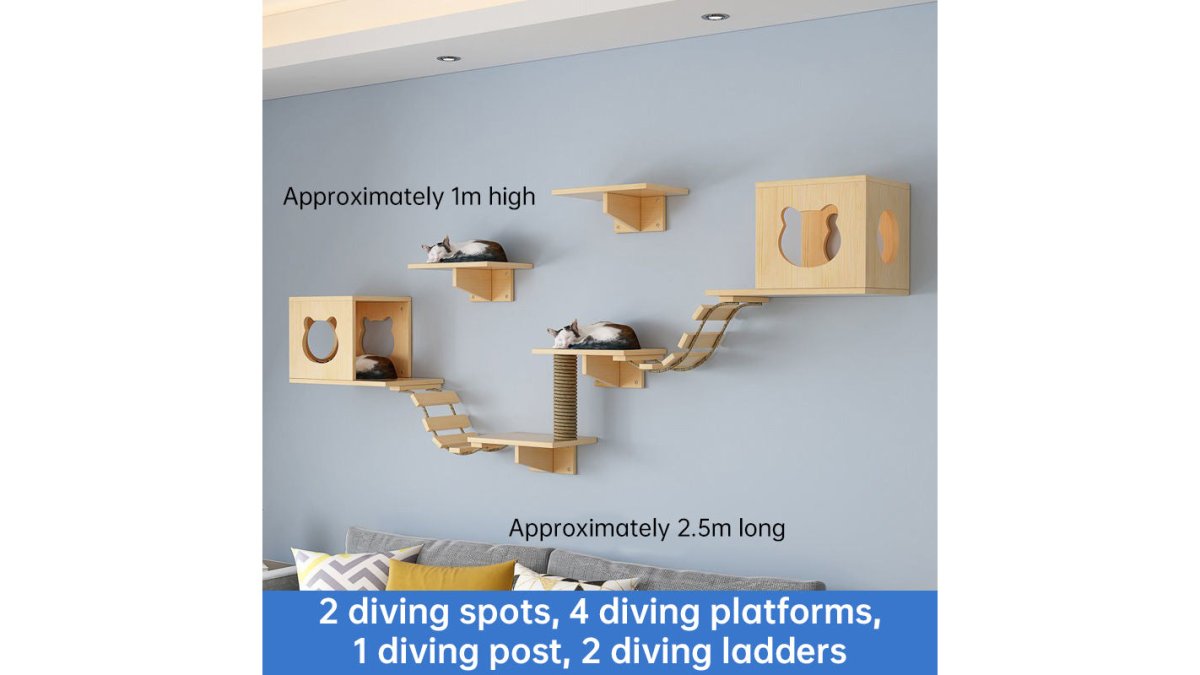
Use vertical space: Wall-mounted shelves and climbing structures free up floor space while adding visual interest. Cats love vertical territory, and wall-mounted options like the Wall-Mounted Cat Hammock & Sisal Scratch Post Set at $49.99 transform wasted wall space into functional pet real estate.

Position beds strategically: Place pet beds where your pet naturally wants to be, near windows for sunbathers, by the door for watchers, in quiet corners for anxious pets. Elevated beds keep pets off cold floors and create visual separation from your seating area.
Where to Position Beds, Crates, and Bowls
Placement is everything. Use the logic below rather than a single generic rule.
- Beds and crates: Position along walls or in corners, out of the sightline from your main seating area. In open-plan rooms, use the back of a sofa or a console table as a visual screen so the crate reads as furniture, not equipment. Leave a clear walking path on the pet's preferred side.
- Water and food bowls: Keep these near the kitchen or a utility zone, not the living room's focal point. If bowls must stay in the living room, place them on a low tray against a wall, and choose a mat in the same color family as your rug so the station disappears into the floor plane.
- Litter boxes (for cats): Place in low-traffic corners or behind furniture screens, never where guests see them from the entry. A top-entry box or furniture-style surround reduces visual noise; keep the opening facing away from seating areas. For multi-cat homes, place boxes on separate walls to reduce guarding (Litter box preference in domestic cats: covered versus uncovered).
- Scratching posts and cat trees: Put them beside the furniture cats already scratch. A post next to the sofa arm absorbs the behavior where it happens. Choose a height that lets the cat stretch fully, and anchor it so it does not tip.
Creating Visual Balance with Your Décor
The right styling makes pet gear part of your design story.
Match your color palette: Choose pet beds, storage, and accessories in neutral or earth tones that complement your décor. Grays, taupes, and warm whites blend seamlessly; avoid bright primary colors that clash with your living room's mood.
Coordinate patterns and textures: If your sofa is solid, a patterned pet bed adds interest; if your décor is patterned, keep pet gear neutral. Soft textures like plush or tweed feel cozy and upscale.
Use furniture as camouflage: A storage ottoman with a pet bed inside serves double duty. A side table with a hidden compartment stores toys. A console table behind a sofa hides bowls and leashes from guests.
Scale matters as much as color: Measure your pet's sleeping footprint and choose a bed with roughly the visual weight of a floor cushion or pouf.
Pet Toy Storage Ideas That Keep Clutter Hidden
Smart storage keeps toys accessible to your pet but invisible to your guests.
Decorative baskets and bins: Woven natural-fiber baskets fit any décor while holding toys, leashes, and supplies. Place them on shelves or beside a pet bed; look for handles for easy access.
Storage ottomans: A cushioned ottoman stores toys underneath while providing extra seating or a footrest. The Pet Dog and Cat Bed Villa - Dual Use Space Capsule at $49.99 serves as both a cozy bed and a visual anchor.
Wall-mounted solutions: Pegboards, wall hooks, and floating shelves keep leashes, harnesses, and small toys organized vertically, smart for small spaces where floor clutter isn't an option.
Coffee table storage: A coffee table with a lower shelf or hidden compartment keeps toys within reach but out of sight. Choose one with a closed storage area rather than open shelving.
| Storage Type | Best For | Visual Impact | Accessibility |
|---|---|---|---|
| Decorative baskets | Toys, blankets | Warm, intentional | High |
| Storage ottoman | Daily toys | Seamless, functional | Medium |
| Wall-mounted hooks | Leashes, harnesses | Clean, minimal | High |
| Closed coffee table | Small toys | Invisible | Low |
Small Apartment Pet Furniture: Space-Saving Solutions
Small spaces demand smart choices, every piece must serve multiple functions. Prioritize renter-friendly, reversible solutions: no-drill mounting, movable pieces, and storage that reconfigures without damaging walls.
Vertical furniture without drilling: Wall-mounted cat shelves, climbing trees, and beds reclaim floor space, but renters often cannot put holes in walls. The Wall Mounted Cat Scratcher with Sisal & Ball Toy at $44.99 mounts on any wall and includes a dangling toy.
Wall-Mounted Cat Hammock & Sisal Scratch Post Set →

Multifunctional pieces: Choose pet beds that double as storage, side tables with hidden compartments, and crates that match your décor and serve as furniture.
Fold-away options: Collapsible pet beds and portable crates tuck into closets when not needed.
Under-furniture storage: Low-profile pet beds slide under side tables or consoles, out of the visual flow but still accessible.
Reversible and movable layouts: In a rental, avoid built-ins and permanent changes. Use freestanding shelves, rolling carts, and stackable bins that move with you.
No-drill hooks and over-door organizers: Over-door hooks and adhesive strips hold leashes, harnesses, and a lint roller near the entry.
Choose pieces that match your existing style: Small apartment pet furniture works best when it doesn't announce itself.
How to Create a Pet Zone in a Living Room
A dedicated pet zone gives your pet a sense of belonging while keeping gear contained. This is where how to style pet gear in living rooms becomes a design exercise.
Define the boundaries: Use a rug, furniture arrangement, or visual marker to show your pet where their space is. Pets understand zones.
Include all essentials: A complete pet zone has a bed, water access, toys, and (for cats) a scratching post, so your pet doesn't wander the living room for supplies.
Make it cozy: Add soft textures, good lighting, and a quiet location. A corner with a window is ideal, natural light and views keep pets entertained.
Keep it accessible: Don't hide everything. A basket of toys within reach encourages your pet to play in their zone rather than dragging toys across your living room.
Maintain clear sightlines: Position your pet zone so you can see your pet from your main seating area.
Maintain Your Styled Pet Space: Cleaning and Durability
A beautiful pet space only works if it's easy to maintain. Build cleaning into your routine from day one.
Weekly vacuuming: Pet hair accumulates fast.
Washable covers: Choose pet beds with removable, washable covers to extend the bed's life and keep it fresh.
Spot-clean immediately: Keep enzymatic cleaner on hand. The sooner you treat a stain, the less likely it sets permanently.
Rotate and refresh: Wash pet bedding weekly in hot water, replace worn toys, and swap winter blankets for lighter covers in summer.
Inspect furniture regularly: Check for loose seams, worn fabric, or damage before they become expensive repairs.
A well-maintained pet space lasts longer and looks better, quality, durable pieces pay off with consistent care.
Creating a living room that works for both you and your pets is entirely possible. Choose durable materials, place gear strategically, and store supplies smartly.
At Two Doodle Nerds, we believe your home should celebrate your pets, not accommodate them reluctantly. Our curated collection of premium pet supplies and décor helps you create spaces where your pets feel at home and your living room stays beautiful. With free shipping on orders over $50, explore pieces that match your style and your pet's needs without compromise. Search our collection to find the perfect pieces for your pet zone today.
Frequently Asked Questions
How can I make pet supplies look good in my living room?
Choose pet gear in neutral colors or patterns that match your existing décor palette. Select pieces made from quality materials like solid wood or soft velvet that complement your furniture. Coordinate your pet bed color with your sofa or throw pillows, and use decorative baskets or storage ottomans to contain toys and supplies. Opt for wall-mounted solutions like cat shelves or scratching posts to keep items off the floor. The key is treating pet gear as intentional décor rather than afterthoughts.
What materials work best for pet-friendly living rooms?
Look for durable, easy-clean fabrics and surfaces that resist stains and scratches. Low-pile rugs trap less pet hair than plush options. For pet beds, choose washable covers or materials like soft velvet with non-slip bases. Solid pine wood furniture and sisal rope scratching posts offer durability without showing wear quickly. Avoid light-colored upholstery unless you're prepared for frequent cleaning. Stain-resistant fabrics and sealed wood finishes help your space stay beautiful despite daily pet activity.
Where should I put a dog bed in the living room?
Position the dog bed in a corner or along a wall where your pet can observe family activity without blocking traffic flow. Place it away from direct sunlight and drafts to keep your dog comfortable. If your living room layout allows, tuck the bed beside a sofa or under a console table to integrate it visually. Elevated beds work well in living rooms because they save floor space and look less bulky than traditional cushions. Ensure the spot is easily accessible for your dog and simple for you to vacuum around.
How do I keep pet toys from cluttering my living room?
Use decorative baskets, storage ottomans, or bins that match your décor to contain toys. Keep only a few toys accessible at a time and rotate others. Wall-mounted storage solutions or hooks save floor space while keeping items visible and organized. Consider a storage ottoman that doubles as seating or a side table. Label baskets by toy type or pet to make cleanup faster. Establish a daily 10-minute tidy routine to return toys to storage before guests arrive or before bed.