

How to Style Living Room Decor: A 2026 Guide
Table of Contents
- Start with a Clear Vision for Your Living Room Decor
- How to Arrange Living Room Furniture for Flow and Function
- Layer Lighting to Set the Right Mood
- Rugs, Textiles, and Mixing Textures in Your Living Room Decor
- Wall Decor, Accent Walls, and Curated Decor Displays
- Small Living Room Decor Hacks That Actually Work
- Frequently Asked Questions
Last Updated: August 30, 2026
Start with a Clear Vision for Your Living Room Decor
Living room decor is the art of arranging furniture, color, light, and textiles into a space that functions well and feels intentional. Most people skip the crucial first step: getting clear on how you actually use the space before buying anything. They buy a rug they love, a lamp that caught their eye, and throw pillows on sale, then wonder why the room feels scattered. The fix is a clear vision before anything else lands in your cart.
Pick a Style That Fits How You Actually Live
Start by naming your aesthetic, not the one you pin on inspiration boards, but the one that matches your daily routine. A minimalist interior design style works beautifully in magazines but terribly in a home with kids and pets. A bohemian look suits a collector but overwhelms someone who finds clutter stressful.
Common living room styles worth knowing:
- Minimalist: Clean lines, neutral palette, very little decorative clutter
- Mid-century modern: Warm wood tones, tapered legs, geometric patterns
- Bohemian: Layered textiles, global-inspired patterns, eclectic curated decor
- Contemporary: Current trends, mixed materials, neutral with bold accent pieces
- Transitional: Blends traditional and contemporary for a timeless, cohesive look
Pick one as your anchor. You can mix influences, but one style should dominate. This decision filters every future purchase and prevents the "random collection" problem.
Choose a Color Palette Using the 60-30-10 Rule for Decorating
The 60-30-10 rule for decorating is the most reliable color framework in interior design. The rule divides your color scheme into three proportions: 60% dominant color, 30% secondary color, and 10% accent color.
| Role | Percentage | Where It Lives |
|---|---|---|
| Dominant | 60% | Walls, large sofa, area rug |
| Secondary | 30% | Accent chairs, curtains, side tables |
| Accent | 10% | Throw pillows, artwork, small decor objects |
A common mistake is treating the accent color as an afterthought. The 10% is where the room gets its personality. A warm beige room with soft gray secondary tones comes alive with a terracotta or deep navy accent.
How to Arrange Living Room Furniture for Flow and Function
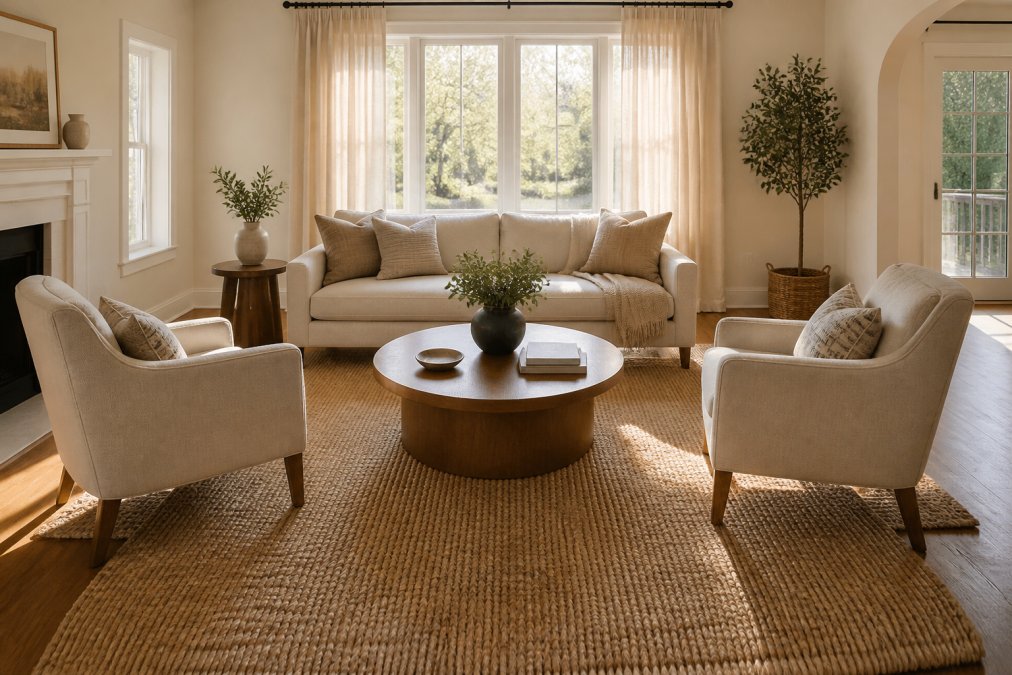
Furniture arrangement is the structural backbone of any well-styled living room. The most common error is pushing all furniture against the walls, which creates a disconnected, waiting-room feel. Effective spatial planning pulls pieces toward the center to create intimacy and conversation zones.
A well-arranged living room groups seating within comfortable conversation distance, typically no more than eight feet between facing seats, with clear pathways of at least 30 inches for traffic flow. The area rug anchors the entire arrangement.
Anchor the Seating Around a Focal Point
Every living room needs a focal point, a dominant visual anchor that draws the eye when you walk in. In older homes, that's typically the fireplace. In newer spaces, it's often a large window, a media console, or a statement wall. Orient your primary seating toward it. The sofa faces the fireplace. Chairs angle toward the view.
The focal point doesn't have to be architectural. A large piece of artwork, a floor-to-ceiling bookshelf, or a well-styled console table can serve the same function. You can create a focal point where none exists.
Traffic Flow and Scale and Proportion
Scale and proportion are underestimated in furniture arrangement. A sofa that's too large makes a room feel cramped. A coffee table that's too small makes the seating group look unanchored. The general rule: the coffee table should be roughly two-thirds the length of your sofa.
Map out how people move through the space before finalizing placement:
- Identify entry and exit points (doorways, hallways, kitchen access)
- Mark pathways with tape on the floor before moving furniture
- Ensure at least 30 inches of clearance on main walkways
- Keep pathways free of decorative objects that create obstacles
The floor plan should feel intuitive. If guests have to think about how to get to the couch, something's in the way.
Layer Lighting to Set the Right Mood
Lighting is where living room styling either comes together or quietly falls apart. Most rooms rely on a single overhead fixture, which produces flat, unflattering light that drains warmth from even the most carefully chosen color palette.
Effective lighting design uses three layers: ambient lighting for overall illumination, task lighting for reading and focused activities, and accent lighting to highlight artwork or architectural features. According to the Illuminating Engineering Society's residential lighting guidelines, layered lighting dramatically improves both the function and perceived comfort of a space.
For a living room, warm bulbs in the 2700K-3000K range create a relaxed, inviting atmosphere. Build your lighting in this order:
- Ambient layer: Overhead fixture or recessed lighting on a dimmer
- Task layer: Floor lamp beside the reading chair, table lamp on the side table
- Accent layer: Picture lights, wall sconces, or LED strip lighting behind a TV console
Dimmers are non-negotiable. They let a single room serve as a bright daytime workspace and a relaxed evening space without any furniture moving.
Rugs, Textiles, and Mixing Textures in Your Living Room Decor
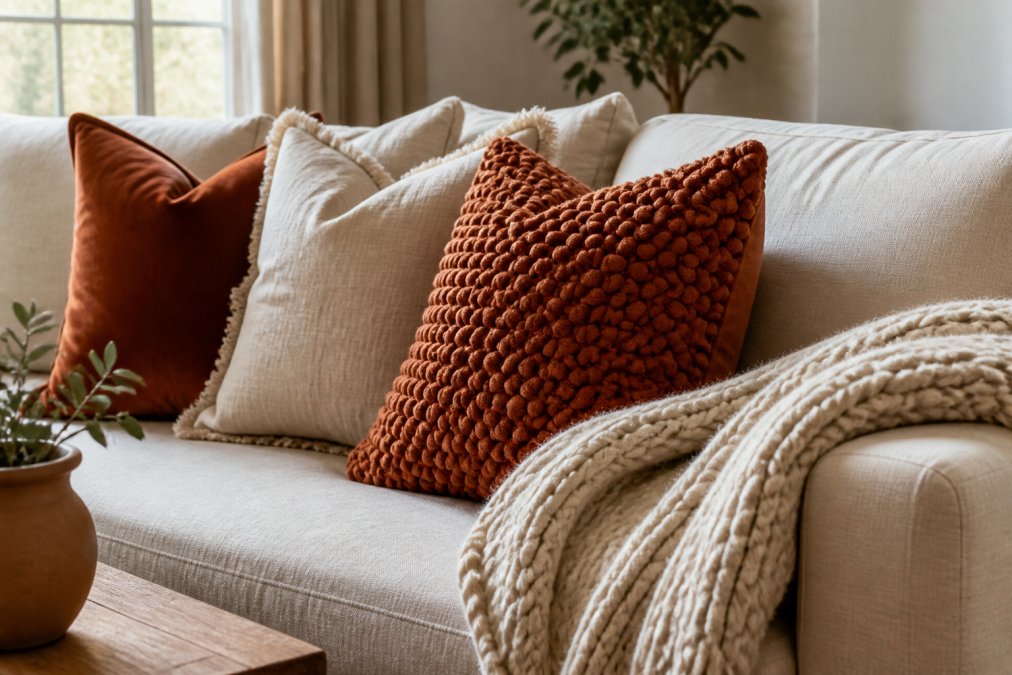
Textiles are the fastest way to change the mood of living room decor without touching a single piece of furniture. Mixing textures works because the eye and hand register variety as richness. A velvet pillow next to a linen one next to a chunky knit throw creates visual and tactile interest that a room with all-matching fabrics cannot achieve.
Rug Placement and Sizing Rules
Rug sizing is where most living rooms go wrong. The most common mistake is choosing a rug that's too small, which makes the seating group look like it's floating on an island.
The three standard rug placement approaches for living rooms:
- All legs on: All furniture legs sit on the rug. Requires a large rug (typically 9x12 or larger) and creates a very cohesive, unified look.
- Front legs on: Only the front legs of each piece rest on the rug. Works well in medium-sized rooms and is the most forgiving option.
- All legs off: The rug sits in the center of the seating group with no furniture on it. Only works in very large rooms where the rug itself is a statement piece.
For most rooms, front legs on is the right call.
Throw Pillows, Blankets, and Window Treatments
Throw pillows follow a simple formula: vary the size, vary the texture, and anchor everything with one unifying color. A standard arrangement uses three to five pillows per sofa: two large square pillows in a solid or subtle pattern, two medium pillows in a contrasting texture, and one lumbar pillow as the finishing layer.
Window treatments affect both light and perceived ceiling height. Hanging curtains close to the ceiling rather than at the window frame makes ceilings read as taller. Extending the rod six to twelve inches beyond the window frame makes windows appear wider. According to Architectural Digest's guide to window treatment proportions, the placement of curtain rods relative to the ceiling is one of the most frequently cited professional design corrections in residential spaces.
Wall Decor, Accent Walls, and Curated Decor Displays
Bare walls read as unfinished. Overcrowded walls read as chaotic. The goal of wall decor is to create visual weight that balances the furniture below without competing with it.
An accent wall is the most direct way to introduce color, pattern, or texture without committing the entire room. Wall paneling, a bold paint color, or a large-scale wallpaper pattern can define the space and give the room a clear focal point. The accent wall should sit behind the primary seating, typically the sofa wall, so it anchors the arrangement.
For gallery walls, lay your arrangement on the floor before putting a single nail in the wall. Map out spacing, test different orientations, and photograph the layout. Then transfer it to the wall.
Practical rules for gallery walls:
- Keep consistent spacing between frames (typically 2-3 inches)
- Choose a unifying element: same frame color, same mat color, or same subject matter
- Mix sizes deliberately: one large anchor piece with smaller supporting pieces
- Hang the center of the arrangement at eye level (approximately 57-60 inches from the floor)
Small Living Room Decor Hacks That Actually Work
Small living room decor requires a different mental model. The goal isn't to make the room look bigger, exactly. It's to make it feel intentional at a smaller scale. The real answer is editing ruthlessly. Every object in a small room competes for attention. Fewer, better-chosen pieces always beat more pieces at a lower price point.
Multi-Functional Zones and Smart Storage Solutions
Multi-functional living room zones are the defining challenge of modern home design, especially in smaller spaces where the living room also serves as a home office, reading nook, or dining overflow area. Define each zone with lighting and rugs rather than walls.
A reading nook can be carved out with a floor lamp and a small rug, even within a larger open-plan space. A work zone can be defined by a console desk placed behind the sofa, facing away from the TV. The zones feel distinct because they have distinct anchors.
Smart storage solutions that don't sacrifice aesthetic:
- Ottoman with storage: Replaces the coffee table and hides blankets, remotes, and toys
- Built-in or floating shelves: Vertical storage that draws the eye up and maximizes floor space
- Sofa with built-in storage: Particularly useful in studio apartments where the living room doubles as a bedroom
- Decorative baskets: Organize clutter visibly without hiding it behind closed doors
Build a monthly edit into your routine. Remove anything that doesn't serve a function or bring genuine visual pleasure.
Budget-Conscious DIY Styling Tips
The most expensive-looking rooms are often the ones with the fewest objects, not the most. Before spending anything, edit what you have.
Budget-friendly styling moves that have genuine impact:
- Rearrange existing furniture using the focal-point and traffic-flow principles above. Zero cost, immediate transformation.
- Repaint a single wall as an accent rather than the whole room. Dramatically lower material and labor cost.
- Swap throw pillow covers, not the entire pillow. Covers cost a fraction of full pillows.
- Elevate art with proper framing. A poster in a quality frame reads as intentional; the same poster in a cheap frame reads as temporary.
- Add plants. A healthy fiddle-leaf fig or a cluster of smaller plants introduces organic texture and color that no manufactured object replicates.
According to HGTV's home staging and decor resource center, small, strategic changes to textiles and lighting consistently rank among the highest-return updates homeowners make before listing a property.
HomeandHabitBasket carries a curated selection of home decor, textiles, and seasonal finds that make it straightforward to source the accent pieces, storage solutions, and everyday essentials covered in this guide, all with free shipping. Buying fewer, better-quality pieces rather than cycling through cheap decor is both environmentally sound and economically smarter over time. Prioritize natural materials (linen, wool, jute, solid wood) over synthetic alternatives when the budget allows. For guidance on sustainable materials in home textiles, the Environmental Protection Agency's Safer Choice program offers a useful framework for evaluating product materials and certifications.
Styling a living room is less about having the right taste and more about applying the right sequence: vision first, furniture arrangement second, lighting third, textiles fourth, and wall decor last. HomeandHabitBasket's curated home decor selection is built for exactly this kind of layered approach, offering the accent pieces, storage solutions, and seasonal finds that bring a room together without requiring you to shop five different places. Search the HomeandHabitBasket catalog to find the textiles, decor, and organizational essentials that fit your space and your style.
Frequently Asked Questions
What is the 60-30-10 rule for decorating a living room?
The 60-30-10 rule divides your color palette into three parts: 60% is your dominant color, typically used on walls and large upholstery pieces; 30% is a secondary color applied to accent chairs, curtains, or a rug; and 10% is a pop color introduced through throw pillows, vases, or small decor objects. This ratio keeps your living room decor cohesive without looking flat or overly matched. It works across styles, from minimalist to bohemian.
How can I make my living room look stylish on a budget?
Rearranging furniture costs nothing and can completely change how a room feels. Swapping out throw pillows, adding a new rug, or painting one accent wall are low-cost moves with high visual impact. Decluttering and editing down to fewer, more intentional pieces also makes a space look more curated. Shopping curated online retailers for seasonal finds and everyday decor essentials lets you refresh your space without committing to expensive renovation or full furniture sets.
How do you arrange decor on a living room coffee table?
Group items in odd numbers, three objects almost always look more natural than two or four. Vary the heights: place a tall vase or candle next to a stack of books and a small tray or bowl. Keep one-third of the table surface clear so the arrangement feels intentional rather than cluttered. Stick to two or three colors that echo your room's color palette to maintain a cohesive look. Swap seasonal items to keep the display feeling fresh throughout the year.
What are the best ways to mix textures in a living room?
Textural contrast prevents a room from looking one-dimensional. Pair smooth surfaces like a glass coffee table or leather sofa with softer elements: a chunky knit throw, a jute rug, or linen curtains. Introduce visual weight through upholstery fabric, wood grain on side tables, or woven baskets for storage. Aim for three to four distinct textures in the same space. Keeping them within a consistent color palette ensures the variety reads as layered and intentional rather than mismatched.
This article was written using GrandRanker