

Gucci Dog Clothes: A 2026 Buyer's Guide to Designer Pet Wear
Table of Contents
- What the Gucci Dog Clothes Collection Actually Includes
- Material Quality and Craftsmanship in Designer Pet Wear
- Sizing and Fit: A Breed-Specific Guide
- Best Practices for Pet Clothing Maintenance
- How to Style Designer Pet Wear for Everyday Looks
- Authentic vs Replica Dog Clothes: What to Check
- Sustainability and Sourcing in Luxury Pet Fashion
- Frequently Asked Questions
Last Updated: September 29, 2026
What the Gucci Dog Clothes Collection Actually Includes
The Gucci dog clothes line is a genuine ready-to-wear range for pets, not a novelty capsule. It spans knit sweaters, coats, shirts, harnesses, collars, leashes, and lifestyle pieces, built around the same house codes as the human collections.
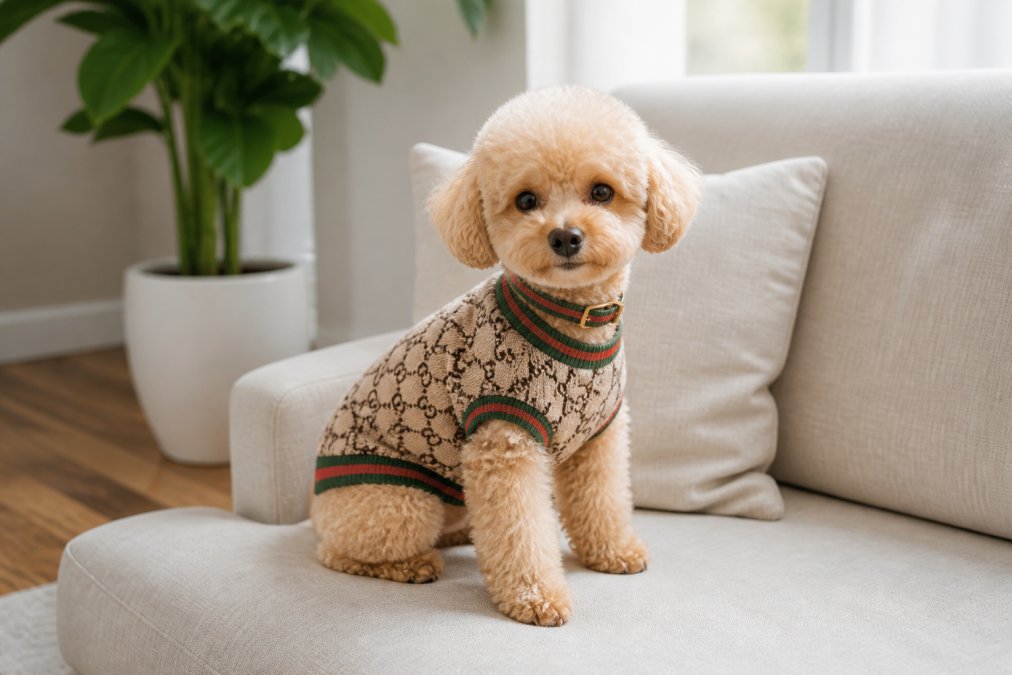
Ready-to-Wear Apparel for Dogs
Ready-to-wear for dogs means garments sized and cut for movement, not costumes: knit sweaters, hoodies, shirts, and outerwear in the house's signature motifs.
- Knit sweaters and cardigans for cooler weather
- Dog hoodies and shirts for indoor layering
- Coats and outerwear for cold-weather walks
- Harnesses and collars sold as coordinated sets
Luxury Accessories and Lifestyle Items
Bowls, carriers, and travel accessories round out the range, blurring the line between pet gear and home décor, which is exactly why they sell.
Material Quality and Craftsmanship in Designer Pet Wear
Material quality in designer pet wear comes down to three things: the textile, the hardware, and the finishing. Gucci's pet pieces use the same material families as its other leather goods and textiles, which justifies the price gap over mass-market pet apparel.
- Stitching density. Closely spaced, even stitches resist pulling. Sparse stitching fails at stress points.
- Edge finishing. Bound or rolled edges stop fraying. Raw-cut edges on a dog garment are a warning sign.
- Hardware weight. Heavier metal hardware signals better plating and less chance of snapping under load.
- Lining. A soft inner lining protects skin and reduces matting under the harness or coat.
Sizing and Fit: A Breed-Specific Guide
Sizing is where most designer pet wear purchases go wrong. Gucci sizes its pet apparel on its own scale, which does not map cleanly to standard pet store sizing. Measure your dog, then match to the brand's chart.
| Breed Type | Body Shape | Sizing Priority |
|---|---|---|
| Standard Poodle / Doodle | Deep chest, long legs | Chest girth first, then back length |
| French Bulldog | Broad chest, short back | Chest girth, allow extra room |
| Chihuahua | Narrow, small frame | Neck and chest, expect to size down |
| Labrador | Sturdy, deep chest | Chest girth, then neck |
| Dachshund | Long back, short legs | Back length is the deciding measure |
Measuring Your Dog for a Tailored Fit
Measure your dog standing, with a soft tape measure. You need three numbers: neck circumference, chest girth at the widest point behind the front legs, and back length from the base of the neck to the base of the tail.
Best Practices for Pet Clothing Maintenance
Pet clothing maintenance determines whether a designer piece lasts one season or five. Follow the care label, wash less often than you think, and never put structured pieces in a hot dryer.
- Wash knitwear inside out, cold, on a gentle cycle
- Air dry flat, away from direct heat
- Spot clean structured coats rather than full washing
- Wipe hardware dry after every wet walk
- Store folded, not hung, so knits don't stretch
How to Style Designer Pet Wear for Everyday Looks
Styling designer pet wear for everyday looks comes down to restraint, but restraint without ergonomics is just a smaller costume. What looks good on a dog often fights how that dog is built: a sweater that photographs beautifully on a square-chested Frenchie will pull across the shoulders of a deep-chested doodle and ride up the back of a long-bodied dachshund.
Breed-Specific Styling and Ergonomics
Body shape dictates which pieces your dog can wear comfortably for more than ten minutes, not just for a photo.
- French Bulldogs and other brachycephalic (flat-faced) breeds. These dogs already struggle to cool themselves through panting. A close-fitting knit or a lined coat traps heat fast. For indoor looks, choose an open-knit cotton shirt or a lightweight harness-and-collar set rather than a sweater. For cold walks, a single structured coat beats a sweater-plus-coat layering, because layers restrict the already-short neck and chest.
- Standard Poodles and doodle crosses. Deep chest, long legs, and a coat that adds visual bulk. A garment cut for a stocky breed of the same weight will be short in the body and tight across the chest. Look for pieces with a longer back length and a chest girth that matches your measurement, not the weight on the size chart. A harness with adjustable chest straps is the safest anchor here because it can be tuned to the deep-chest shape.
- Dachshunds and other long-backed breeds. Back length is the deciding measure, not chest girth. A sweater that fits the chest will still ride up and bunch at the hips. Choose pieces cut long, or skip full garments and style with a collar plus a lightweight bandana-style accessory that doesn't pull on the spine.
- Chihuahuas and other small, narrow frames. Neck and chest run small, and standard sizing often starts too large. Expect to size down, and favor knits that stretch to the body rather than structured coats that gap at the neck.
- Labradors and other sturdy, deep-chested breeds. Chest girth first, then neck. A harness with a front-clip option doubles as a styling anchor and a pulling deterrent, which matters for a breed that leans into the leash.
Seasonal Styling Without Overheating
Seasonal pet wear follows the same logic as human layering, with one overriding rule: a dog regulates heat poorly through its coat, so the garment should never be the reason it's uncomfortable.
- Spring and fall. A lightweight shirt or hoodie covers the in-between weather. For flat-faced breeds, this is often the only garment season that makes sense.
- Winter. A knit sweater or structured coat handles cold. You rarely need both on the same walk. If you do layer, put the smooth, close-fitting piece underneath and the structured coat on top, and check for rubbing at the armpits after the first few wears.
- Indoor wear. Breathable natural fibers and open knit structures. A garment that traps moisture becomes uncomfortable fast, and a dog that's uncomfortable will chew, scratch, or refuse to move, which ruins the look faster than any color clash.
Authentic vs Replica Dog Clothes: What to Check
Authentic vs replica dog clothes is the hardest call in this category, because pet garments are small and easy to copy. The tells are in the construction and paperwork, not the logo.
- Stitching. Authentic pieces have even, dense stitching with clean turns at corners.
- Hardware. Genuine pieces use branded, weighty hardware. Replicas use light, unbranded metal.
- Labels and tags. Check the placement, font, and stitching of interior labels.
- Packaging and paperwork. Authentic purchases come with brand packaging and documentation.
- Seller. Buy from the brand's own channels or authorized retailers. Deep discounts on current-season pieces are a red flag.
Sustainability and Sourcing in Luxury Pet Fashion
Sustainability in luxury pet fashion is a genuine differentiator, and also where marketing language outruns reality. Leather goods carry the largest environmental footprint in this category, and pet accessories use a lot of leather. The useful question isn't whether a brand calls itself sustainable, it's which material the piece is made from and what happens to it at the end of its life.
What the Materials Actually Are
Luxury pet wear falls into four material families, each with a different footprint and care reality.
- Leather (collars, leashes, harnesses, some carriers). The footprint is dominated by the tanning process, not the hide itself. Chrome tanning is fast and cheap but uses heavy metals and produces wastewater that's hard to treat. Vegetable tanning uses plant tannins, takes longer, and is generally considered lower-impact, but it's also less water-resistant and darkens with age. A brand that names its tannery or tanning method is giving you a real signal; a brand that says only 'premium leather' is not.
- Wool and natural fiber knits (sweaters, coats). Lower footprint than leather because there's no tanning step, but wool production carries its own land-use and methane considerations. Denser, tightly knit wools last longer and shed less, which is the most honest form of sustainability in a garment a dog wears daily.
- Cotton and cotton blends (shirts, lightweight layers). The lightest footprint of the four, especially when organic or recycled. The trade-off is durability, cotton wears faster than wool or leather, so it may need replacing sooner.
- Synthetics and coated fabrics (some outerwear, linings). Often the most durable per gram and the easiest to clean, but they're petroleum-derived and shed microplastics in the wash. For a dog garment that gets washed often, that's a real consideration.
Sourcing Signals Worth Checking
Instead of slogans, look for named, verifiable specifics. The brands doing real work are the ones willing to put details on the product page.
- Named material sources. A specific tannery, mill, or region is a stronger signal than a generic 'Italian leather' claim.
- Tanning method. Vegetable-tanned versus chrome-tanned is a concrete, checkable distinction.
- Repair and aftercare programs. A brand willing to repair a collar or re-stitch a harness is telling you it expects the piece to last. That's a durability signal as much as a sustainability one.
- Recycled content claims. Look for a percentage, not a logo. 'Made with recycled materials' without a number is marketing.
The Durability Argument
Durable materials are the most honest form of sustainability in pet wear. A harness that lasts five years replaces four or five cheap ones, that math works even if the materials aren't recycled, because environmental cost is spread across a product's useful life.
Lower-Impact Choices by Piece Type
For buyers who want lower-impact options, the ranking is consistent across the category:
- Textile pieces (knit sweaters, cotton shirts) generally carry a lighter footprint than leather because they avoid the tanning process entirely.
- Vegetable-tanned leather is a lower-impact choice than chrome-tanned for collars, leashes, and harnesses, with the trade-off of more careful maintenance.
- Repairable hardware matters more than material for accessories. A collar with a replaceable buckle outlasts one with a sealed, non-serviceable clasp.
Frequently Asked Questions
Does Gucci sell dog clothes?
Yes, Gucci has offered pet apparel and accessories as part of its lifestyle range, including dog coats, sweaters, shirts, and harnesses. Availability shifts with seasonal collections, so specific pieces come and go rather than staying permanently on sale. If you are searching for gucci dog clothes, check the official Gucci site or a licensed retailer for what is currently in stock. Many of the most recognizable items, such as monogram coats and matching collars, sell out quickly after each drop.
How do I spot authentic Gucci dog accessories?
Start with the hardware. Authentic pieces use solid, weighty buckles and engraved logo plates, while replicas often use lightweight cast metal with shallow or blurry engraving. Check the stitching too: genuine items have even, tight stitching with no loose threads, and the interior label is sewn straight and centered. Packaging matters as well, since authentic pieces arrive with branded dust bags and tags. If the price seems far below retail, treat it as a warning sign rather than a bargain.
Are designer dog clothes worth the investment for your pet?
It depends on what you want from them. Designer pieces typically use higher-quality textiles, hold their shape after repeated washing, and fit better than mass-market alternatives, which matters for dogs with unusual proportions. If your dog wears a coat daily through winter, the cost per wear drops quickly. If you want a single statement piece for photos or gifts, a smaller item like a collar or bandana gives you the same aesthetic appeal for less. Set a budget first, then choose accordingly.
How should I care for designer dog clothes so they last?
Hand wash in cold water with a mild detergent, then lay flat to dry away from direct heat. Machine washing and tumble drying break down breathable fabrics and shrink tailored seams, which is the fastest way to ruin a fitted coat. Brush off loose hair and dirt before washing, and treat stains promptly rather than letting them set. Store folded pieces in a dust bag or breathable cotton sack, not sealed plastic, so the textiles can air out between wears.
Designer pet wear only pays off when the fit is right and the piece survives real life. If you want premium pet supplies and home-friendly pieces without guessing at sizing, Two Doodle Nerds curates options that hold up to doodle coats and busy households. Browse the collection for high-quality pet supplies, unique home décor, and thoughtful gifts, and take advantage of free shipping on orders over $50. Search the shop and find pieces that fit your dog and your space.